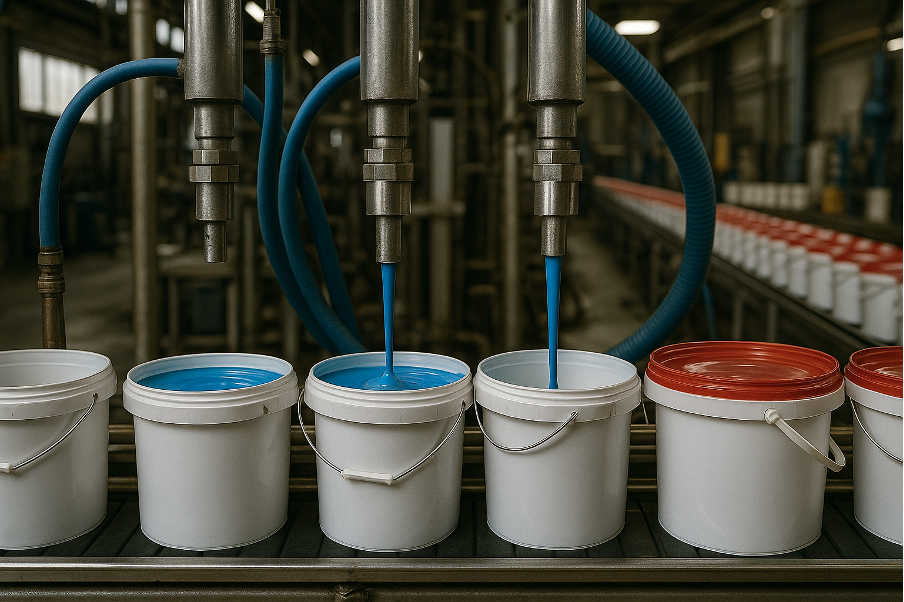
The IBRG Wet-State Preservation Group focuses on the development and validation of methods to assess the efficacy of biocides in water-based systems. These systems—such as paints, polymer dispersions, and household products—are vulnerable to microbial contamination during storage and use. Wet-state preservation refers to the protection of such products from spoilage by bacteria, fungi, and algae while they are still in liquid or semi-liquid form.
The group is structured into three active subgroups, each addressing specific application areas:
Paints
Focusing on microbial stability in decorative and industrial coatings
Polymer Dispersions
Covering dispersions, adhesives, and related aqueous systems
Household
Addressing preservation challenges in cleaning and domestic-use products
We bring together experts from industry, regulatory bodies, research institutes, and testing laboratories to collaboratively develop methods that serve both regulatory and industrial needs. Our work supports the generation of efficacy data for the registration of biocidal active substances and products under the EU Biocidal Products Regulation (BPR), while also offering practical tools for manufacturers.
In recent years, the group has successfully developed:
4 methods for regulatory use under the BPR
2 methods tailored for industrial application
All of these were created through collaborative experimental studies involving multiple stakeholders.
Beyond method development, the group publishes white papers that provide deeper insights into specific technical topics—such as inoculum design, test protocols, and microbial behavior. These documents help guide both regulatory submissions and internal quality assurance processes. Additionally, the group has contributed to the field through various scientific and technical publications on the topics it addresses.
We also explore emerging methodologies and aim to better understand the early stages of microbial contamination, helping to identify and mitigate spoilage risks before they escalate.
Method for Determining the Basic Efficacy of Biocidal Active Substances used in Aqueous- Based Paints
IBRG P16-001.04
This document describes a method for determining the basic efficacy of biocidal active substances in aqueous based paints and is intended for the generation of data to enable registration of active substances.
Issue 2: Addition of Gram Positive bacterium to challenge consortium and harmonisation of statistical procedure with other methods.
Issue 3: Minor typographical corrections and update of Culture Collection numbers.
Issue 4: Changes to the inoculum (the addition of a filamentous fungi), inclusion of a method to determine growth of the filamentous fungi and editing to align the method with other IBRG methods.
Method for Determining the Basic Efficacy of Biocidal Active Substances used in Polymer Dispersions
IBRG PDG16-001.04
This document describes a method for determining the basic efficacy of biocidal active substances in polymer dispersions and is intended for the generation of data to enable registration of active substances.
Issue 2: Addition of Gram Positive bacterium to challenge consortium and harmonisation of statistical procedure with other methods.
Issue 3: Minor typographical corrections and update of Culture Collection numbers.
Issue 4: Changes to the inoculum (the addition of a filamentous fungi), inclusion of a method to determine growth of the filamentous fungi and editing to align the method with other IBRG methods.
Method for Determining the Basic Efficacy of Biocidal Active Substances used to Preserve Aqueous-Based Products
IBRG PDG16-007.05
This document describes a method for determining the basic efficacy of biocidal active substances for in-can preservation in aqueous based products and is intended for the generation of data to enable registration of active substances. Samples containing the active substance under test are repeatedly inoculated with defined suspensions of microorganisms and then incubated. The changes in the size of the populations over time are used to determine the basic antimicrobial properties of the active substances being evaluated. It is important to note that the results obtained may not describe the performance of the active substance under normal conditions of use.
Issue 2.0: Typographical corrections.
Issue 3.0: Correction of volumes stated in neutraliser validation method and revision of definition of minimum levels of growth.
Issue 4.0: The addition of a Precision Statement and typographical corrections.
Issue 5.0: Inclusion of a method to determine growth of the filamentous fungi and editing to align the method with other IBRG methods.
Method for Evaluating the Resistance of Polymer Dispersions to Microbial Growth in the Wet State
IBRG WPG22-006.02
This document describes a method for end-users to determine the susceptibility of polymer dispersions to microbial growth and the effectiveness of biocides (preservatives) used in them. This method is intended for technical service laboratories. It is not to be used to produce data for biocidal product registration. Samples are repeatedly inoculated with defined suspensions of microorganisms and then incubated. The changes in the size of the populations both over time and in treated compared with untreated materials (if appropriate) are used to describe the antimicrobial properties of the materials. The results obtained may not describe the performance of the treated materials under conditions of use.
Method for Evaluation the Resistance of Aqueous based Paints to Microbial Growth in the Wet State
IBRG WPG23-005.02
This document describes a method for end-users to determine the susceptibility of paints to microbial growth and the effectiveness of biocides (preservatives) used in them. This method is intended for technical service laboratories. It is not to be used to produce data for biocidal product registration. Samples are repeatedly inoculated with defined suspensions of microorganisms and then incubated. The changes in the size of the populations both over time and in treated compared with untreated materials (if appropriate) are used to describe the antimicrobial properties of the materials. The results obtained may not describe the performance of the treated materials under conditions of use.
Method for Evaluating the Curative Efficacy of Biocidal Substances to Microbial Growth in the Wet State
IBRG WPG23-006.02
This document describes a method for determining the basic efficacy of biocidal active substances in aqueous based products for curative action and is intended for the generation of data to enable registration of active substances. Samples are inoculated with defined suspensions of bacteria and then incubated. Following growth of the populations, the samples are treated with the biocidal active substance under test and incubated for a defined period. The changes in the size of the populations over time are used to determine the basic antimicrobial properties of the active substances being evaluated. It is important to note that the results obtained may not describe the performance of the active substance under conditions of use.
Method for Determining the Basic Efficacy of Biocidal Active Substances used to Preserve Homecare Products
IBRG WPG25-007.01
This document describes a method for determining the basic efficacy of biocidal active substances for in-can preservation in homecare products and is intended for the generation of data to enable registration of active substances
Samples containing the active substance under test are repeatedly inoculated with defined suspensions of microorganisms and then incubated. The changes in the size of the populations over time are used to determine the basic antimicrobial properties of the active substances being evaluated. It is important to note that the results obtained may not describe the performance of the active substance under normal conditions of use.